Meanwhile in Europe...
In which we discuss Europe's approach to stablecoins
Stable Sis
12/7/20252 min read
When it comes to stablecoin Europe is... Well Europe is being Europe. No landmark regulation with flashy titles (MiCA vs MiFID anyone?), slow pace but an unsurprising common front.
The main piece of regulation is of course MiCA, standing for Markets in Crypto-Assets. In typical European fashion, we called it what it is. If you don't believe me go and look up what the European Space Agency called its telescopes.
The main requirements coming from MiCA are the same as the Genius Act: 1:1 reserves, redemption rights and licensing requirements to issue stablecoins.
There are however significant differences. First, there is no mention of stablecoins. The European equivalent is divided in two classes:
Electronic Money Tokens (EMTs): Tokens referencing a single, official, fiat currency (i.e. USD, EUR, JPY)
Asset-Referenced Tokens (ARTs): Tokens referencing a basket of assets, commodities and/or multiple currencies.
The word token is key here. MiCA wants to make it very clear that these are not to be considered as money.
Second, there is the carve out for tokens that are deemed to behave like stocks or bonds. These instead fall under the much stringent MiFID.
And of course, the EU being the EU, all DORA requirements apply to issuers too. Specific provisions against financial crime have also been issued.
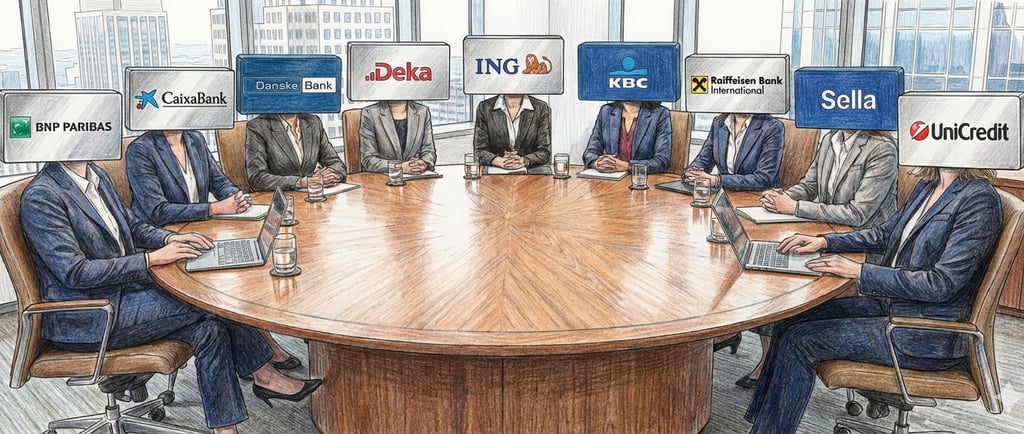
Now you would assume that navigating this labyrinth of regulation has made everyone throw their hands in despair and take a plane to land across the Atlantic. There are however institutions that have spent the last 17 years understanding and navigating EU regulations: good, old-fashioned banks. And ten of them have now gotten together to create Qivalis.
Qivalis presents itself as a euro stablecoin (their words, not mine!), fully regulated, with built-in security and transparency. So, say that you would like to dip your toes into stablecoins but have been spooked out by everything happening in the US. You hear that UniCredit, BNP, ING, CaixaBank, KBC, SEB, Danske Bank, Raiffeisen Bank, Deka and Sella (total market cap ca. 500B USD), you are suddenly paying attention.
And you should, all together these institutions are well capitalised and have access to cheap capital. They also probably have the blessing of all EU institutions who have woken up and realised that sovereignty requires more than a strong legal framework.
Qivalis is meant to be launched in the second half of 2026. Which will be a full year after the Genius Act, and up to 12 years after the launch of the first US stablecoin, according to where you start counting with Tether. That is assuming, they keep to this timeline.
So sure, Europe is being Europe and moving slowly, but the advent of Qivalis and other EU stablecoins which are sure to follow, can be reasonably expected to make the financial system safer and cheaper for consumers.
Compare that with the US, where we can only hope the first bankruptcy claims happens soon while lessons can be learned (relatively) cheaply. Why the sudden pessimism, you'll ask? Read here, to find out.
Until next time,
Stable Sis