
First, second or.... Fifth claim?
In which I find out that my post on the Genius Act has aged really poorly
STABLECOINSREGULATIONSUS
Stable Sis
12/14/20253 min read
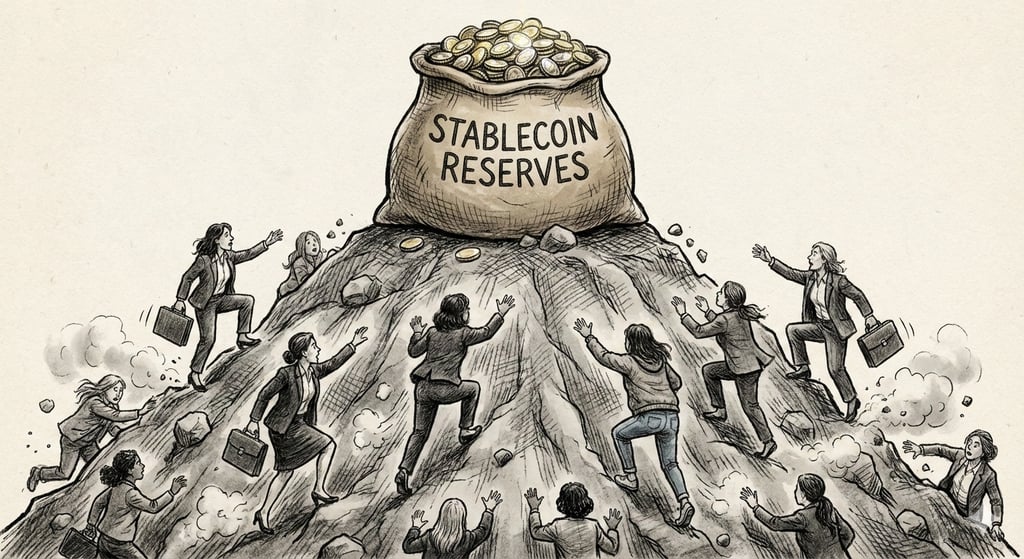
In my Genius Act post, I wrote about the holders of stablecoins having first claim in case of bankruptcy procedures. As an excellent article by Adam Levitin (from credistlips.org) points out, that conclusion may have been a bit simplistic.
The crux of the issue is relatively straightforward: in case of bankruptcy proceedings, the first priority is given to repos and margin claims holders. Next in line are the obligations from the institution(s) providing financing during the bankruptcy proceedings. After them it's the lawyers, accountants and other professionals running the bankruptcy. Fourth come all the netting claims being called by institutions providing services to the stablecoin issuer. These would include banks actually holding the reserves, the institutions providing custody services and of course any loan the stablecoin issuer might have with these financial institutions.
According to Levitin, only after all these people have been paid, stablecoin holders would see their claim satisfied.
Now, I am not a corporate lawyer, my trade is in numbers. I find Mr Levitin's article well written and clear to follow, i do however lack the information of bankruptcy law necessary to review the article critically. So I did the next best thing, I compared the opinions of leading experts on the topic.
The concern on the resolution of bankruptcy for stablecoin issuers is shared widely. There are however two separate schools of thoughts:
Reserves are included in the pool from which to satisfy claims. In this case, Levitin's argument holds more or less without amendments. Stablecoin holders come first, but only in the line of unsecured claims. All the groups mentioned above get to go first and stablecoin holders will have to therefore a)wait until all these claims are settled and b)make their claim against whatever is left from the reserves.
Reserves are NOT included in the pool from which to satisfy claims. In this case, Levitin's argument is of course incorrect. This however creates a logistical nightmare. No one is going to want to lend to an issuer working through their bankruptcy without certainty that their claim will be satisfied. Similarly, the lawyers and accountants helping out in these cases will not get anywhere near the issuer without the same assurance. In this case while in theory stablecoin holders will see their claim met in full, in practice there will not be anyone to see that this happens. And even if there was, it would not be at the speed suggested by the language in the Genius Act.
It is true that the Genius Act itself recognises the need for further guidance in bankruptcy matters and asks the regulators to conduct studies to identify gaps in existing laws and rules. However when accounting for the time to conduct these studies and the legislative action to follow them, clearer legal language is hardly around the corner.
It will be left then to the courts to decide on which side to land in case of bankruptcy. It might even be that with some clever reading it is possible to reconcile these views. There is a third factor to consider, the capital requirements to be imposed on stablecoin issuers, which we should know soon enough and might provide some form of mitigation to this issue.
One thing that should remain clear is that stablecoins are not equivalent to US dollars, even under the Genius Act. That equivalence would require the same level of protection deposit holders currently hold, including virtual unlimited insurance on the money they hold in deposit accounts. If this protection is instated, then we might talk about stablecoins as currencies in the US. Until then, they are better thought of as financial instruments, with all the caveats reserved to those who choose to invest in shares, ETFs or similar funds.
Until next time,
Stable Sis